3v3 + 1 Breaking Lines — Improving Combinations and the Quality of Movement
Combinations and the quality of movement when breaking lines
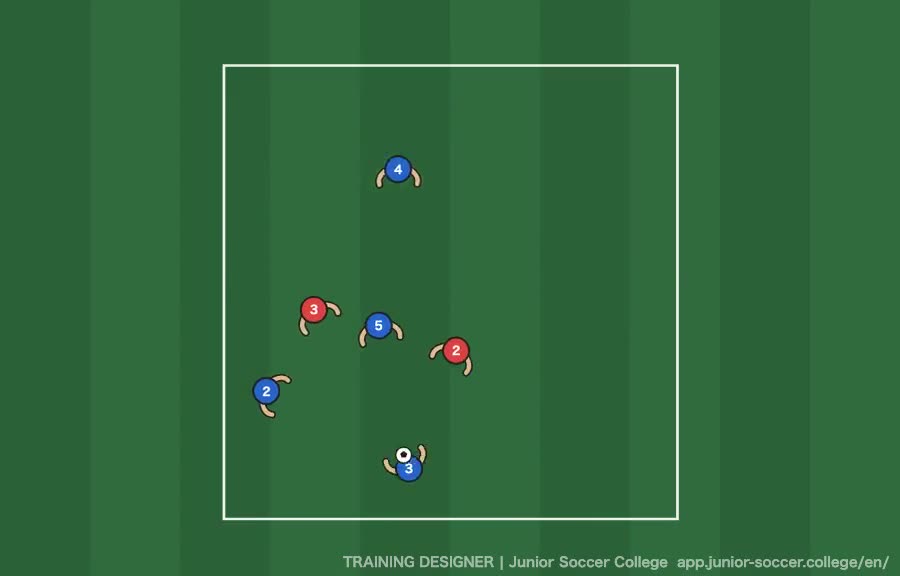
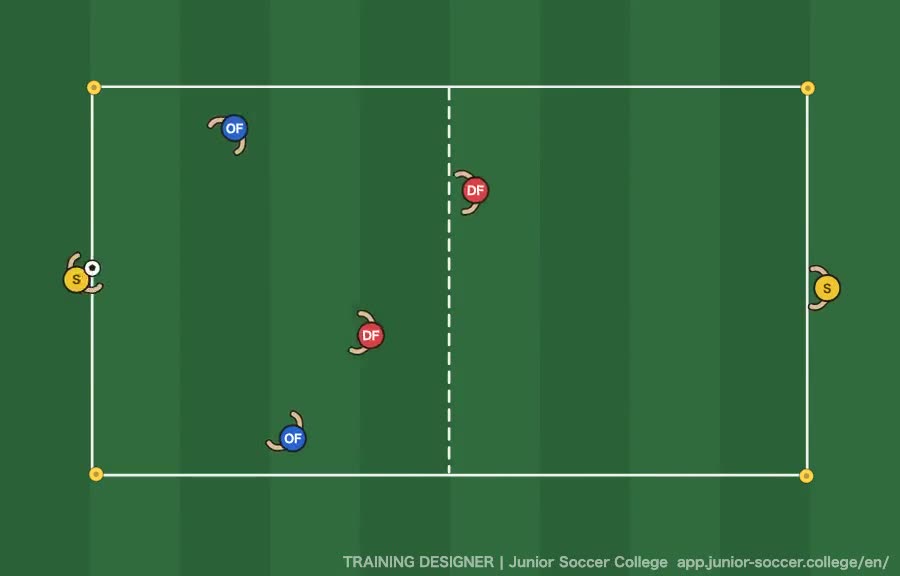
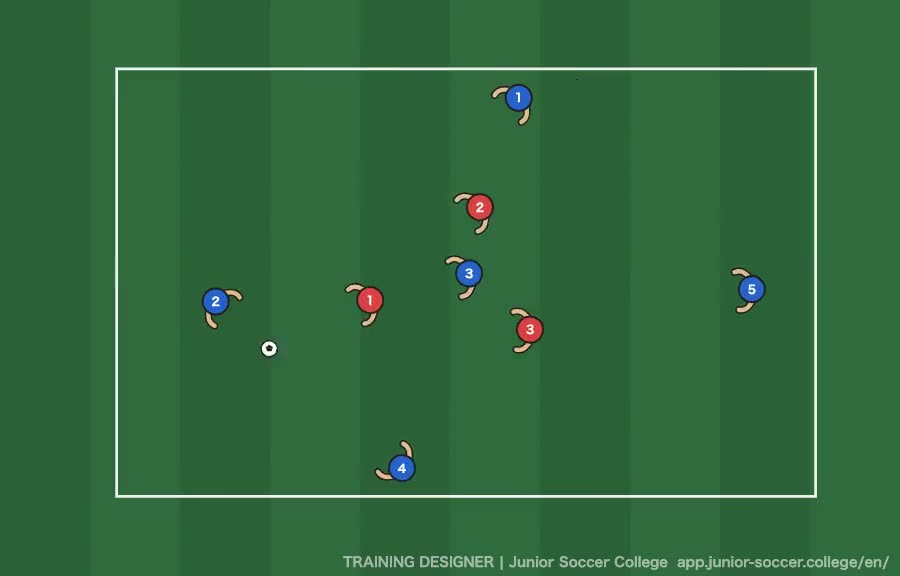
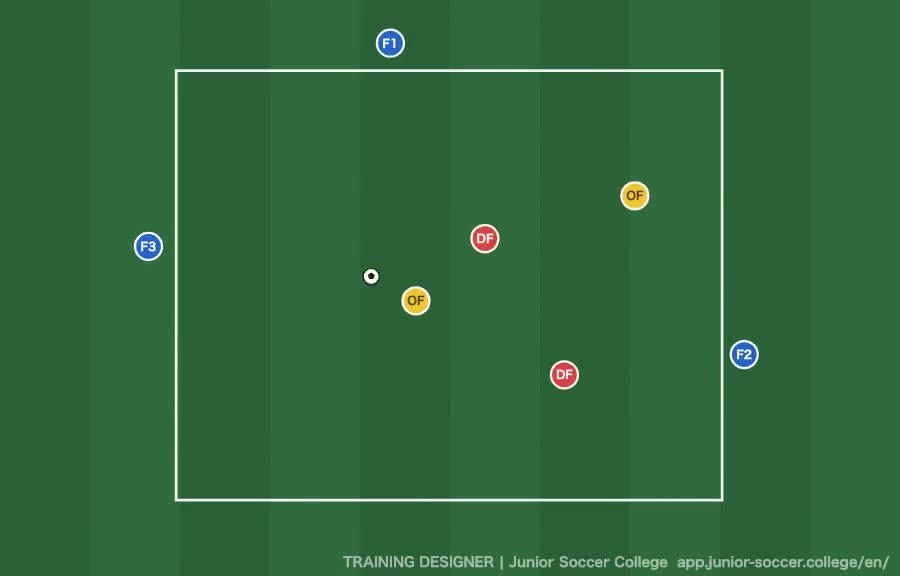
Setup & rules
- Start with a pass from the attacking team's floater
- The attackers break through the defensive line using combinations and so on (passing back to the floater behind them is OK)
- Once they have progressed, they pass to a teammate waiting at the far end and swap
- The player who receives the pass goes straight into the area and breaks through again, 3v3+1
- When the defending team wins the ball, they pass to a floater outside on either side. The player who passed leaves the area, and the player who received comes in
- RULE: the defending team presses higher than the halfway line
Key factors
- Players can't create wide positioning and good body orientation (when players swap and the direction of attack changes, the pass is played before they have taken up positions with enough width and the right body orientation) → the ball carrier creates time for teammates to take their positions
- Positions become fixed and there is no mobility (if the other players move little after a pass, mobility doesn't appear and it stays a 1v1 situation all the time) → give ideas for movement after passing (running in behind, overlapping, etc.)
- Playing only through the relationship between two players (trying to break through with only the pair's relationship even when there is little chance of breaking through on one ball side) → when one side is crowded, look for options on the opposite side
Progressions
- If working in threes feels difficult, it's good to start with practices that improve the relationship between two players (it is also important to take steps: first understand the relationship in pairs, then how a third player gets involved)
Kazu's notes FROM THE COACH
What this can improve: group combinations and movement to attack the space behind / the dribble to beat a defender while moving in coordination with teammates / losing your marker and support / positioning that creates width and depth. Adjust the area size according to how often the situation you want actually happens. Wave-style (oleada, attacking in one direction) formats with goals may give fewer repetitions, so the shooting phase that comes after breaking lines is not included here — but this is ideal when you want to train breaking lines as a group over and over.
Use this drill in your own session
Download it and open it in TRAINING DESIGNER — a free drill designer and session planner in your browser. Edit the diagram, change the numbers, add it to a session, and export as PDF, GIF or video.
In the app: menu → “Import external data” → choose the downloaded file. No sign-up needed. The original Japanese article: junior-soccer.college.One idea a week from Japanese youth football
A free weekly essay on how kids actually learn the game — complexity, the ecological approach, and what 30 years on Japanese grassroots pitches taught me.
Related drills