Training Library › Keeping the ball, progressing
2v2+3 Rondo — Width and Depth with Your Teammates
Taking width and depth in step with your teammates' movement
Players: 2+2+3Age: U-11Time: 15 minLevel: IntermediateIntensity: MediumPhase: Keeping the ball, progressing
Use this when…
- The picture of players outside the area taking width and depth in step with their teammates' movement
Setup & rules
- The floaters can only play outside the area
- The attackers play inside the area
- Passes from floater to floater are not allowed
- When the ball is won, attack and defence switch; the floaters rotate on time
Key factors
- The floaters outside change their height and take positions so they can't be pressed twice by a defender (second press)
- The floaters watch the movement of the players inside, anticipate the next action and take their position
Progressions
- If it's too difficult without floater-to-floater passes, add a constraint such as: after a floater-to-floater pass, the next pass must go to a player inside
- Add touch limits for the floaters or the attackers
Kazu's notes FROM THE COACH
- Observe whether players are moving intentionally, while anticipating.
Use this drill in your own session
Download it and open it in TRAINING DESIGNER — a free drill designer and session planner in your browser. Edit the diagram, change the numbers, add it to a session, and export as PDF, GIF or video.
In the app: menu → “Import external data” → choose the downloaded file. No sign-up needed.One idea a week from Japanese youth football
A free weekly essay on how kids actually learn the game — complexity, the ecological approach, and what 30 years on Japanese grassroots pitches taught me.
Related drills
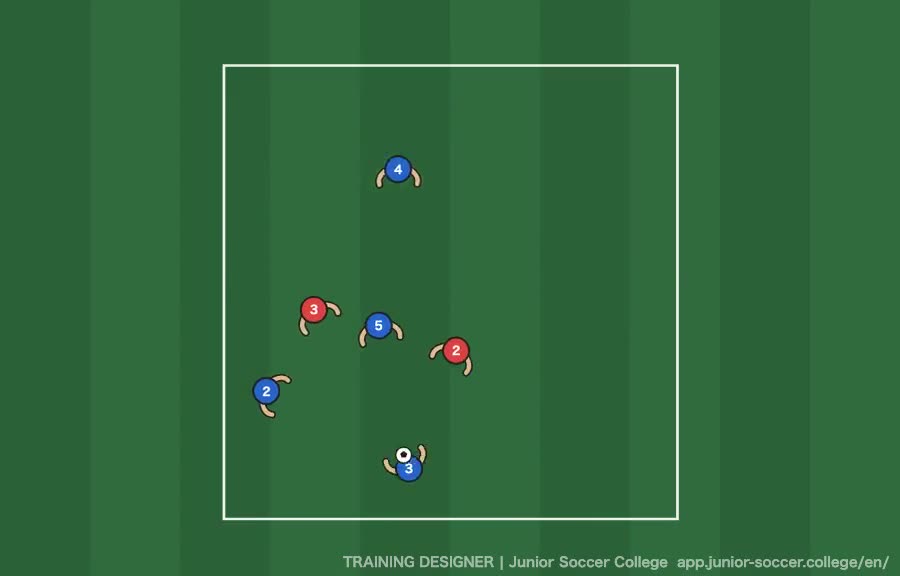
4v2 Rondo (3 outside, 1 inside) — Attack4+2 players · U-10 and up · Keeping the ball, progressing
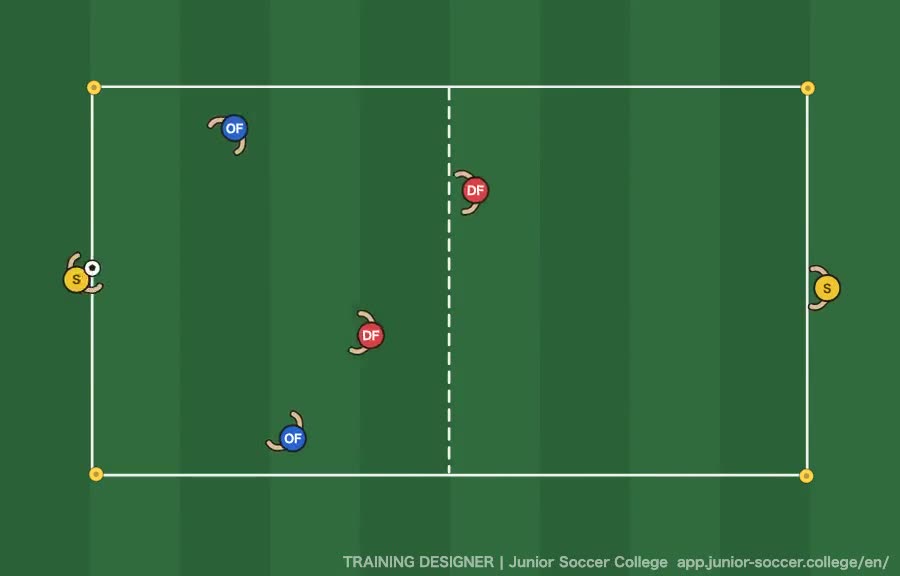
2v2 + 2 Servers Rondo — Losing Your Marker and the Third Player6 (2 + 2 servers + 2) players · U-11 and up · Keeping the ball, progressing
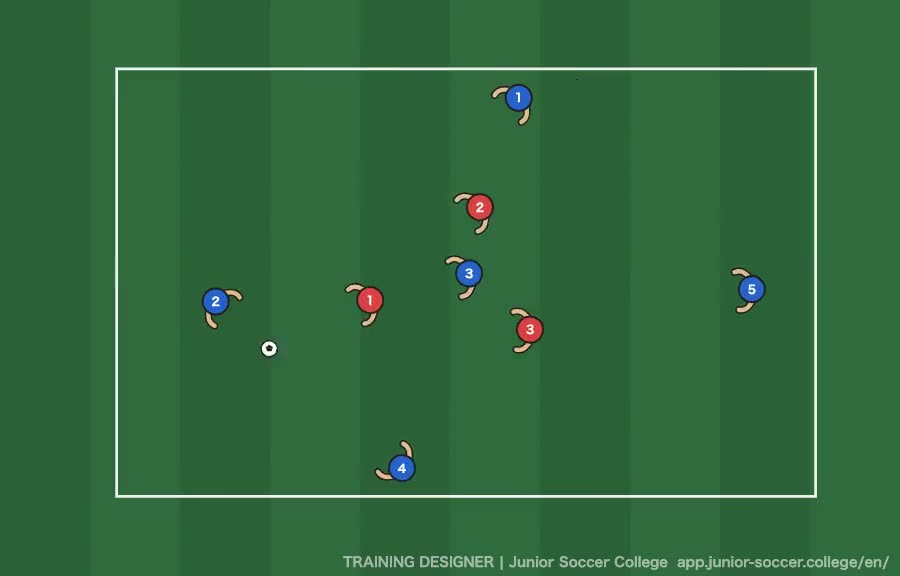
5v3 Rondo — Creating Local Overloads and Fluidity5+3 players · U-11 · Keeping the ball, progressing
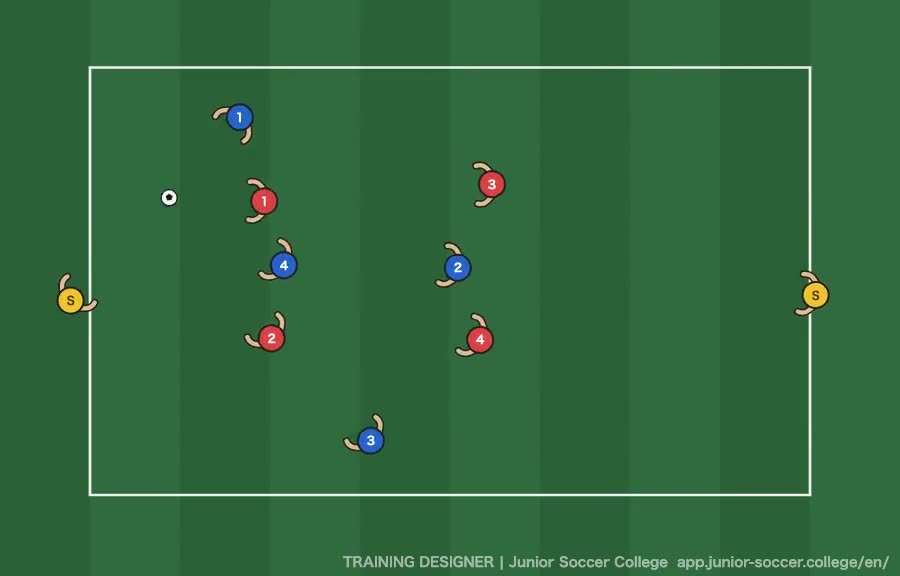
4v4 + 2 Servers Possession (Directional)10 players · U-11 · Progressing
I'm Kazu — a youth football coach in Japan since 1995. These are sessions I actually use, shared from the Japanese coaching site I have run for years (Junior Soccer College). I also write a free weekly newsletter on how children learn the game.