Training Library › Attack
2v2 Attack (Progressing) — Building Combinations
Combinations in pairs (choosing between the one-two and the dribble to beat a defender, and movements to attack the space behind the defenders)
Players: 2 + 2 (10–12 in total)Area: about 15×30 mAge: U-11 and upTime: 20 minPhase: Attack
Setup & rules
- Start with a dribble by the two players on one side, then pass to the players in front. The passers then become defenders.
- The attacking pair try to beat the defenders together.
- After breaking through, pass to the players in front and become defenders.
- The two defenders who were beaten join the line at the front.
- If the defenders win the ball, they pass to the players on the side they started from (backwards). The attackers who lost the ball become defenders.
RULE
- Defenders don't drop back; they step forward to win the ball.
* Adjust the pitch size according to how often the target situations occur. The diagram uses colours, but in practice it works without bibs.
Key factors
- If the defenders are narrow, get past them with positioning and passing
- At primary-school age, defenders often get extremely narrow, so the attackers may be able to break through without using combinations. First, as the basics of support, help players understand the value of creating width and taking a high position where they won't be pressed.
- If a defender is in a covering position, look for the one-two
- At primary-school age, many players try to get in behind in this situation, but they can't because the space is covered. On the other hand, there is space in front, so the one-two becomes effective. Making a movement in behind first and then coming in for the one-two works well.
- If the defenders are level on a line, attack the space behind
- Only now does space open up behind the defenders. Moving out of the marking defender's field of vision makes it easier to get in behind.
- The ball carrier either uses a teammate or takes the defender on alone
- Pass and receive the ball back yourself
- Fake a pass and take the defender on with a dribble
- Watching not only your teammate's movement but also the second defender's movement is a key point
- Add small feints
- Small feints matter: a fake movement by the player receiving, a fake pass by the ball carrier, and so on. A typical failure is passing honestly without a feint, so the pass gets read. How can you trick the opponent and attack in an instant through that opening?
Kazu's notes FROM THE COACH
- For around 10–11 years old (Japanese grade 5) and up (in my experience it's difficult for grade 4). You can do it with 8, but the rotation becomes fast and it gets quite hard. With 12 or more, waiting time increases, so you need to adjust, for example by splitting into two groups. Difficulty: high.
- At first it very likely won't go well. It's OK at the start even if the breakthroughs don't work (if you're too fussy about details from the beginning and keep freezing play, it won't go well).
- Because the attack starts side by side, the difficulty increases. If you want to consider the relationship between midfielders and forwards, adjust by angling the starting points, for example.
- How I actually coach it: first create width and look at the defenders' positions → first look for the one-two and stop for a moment between the lines → if you feel at that moment that the pass isn't coming, keep going diagonally and switch to a movement in behind. The image is to let players move as intuitively as possible, and for that to match the reasoning.
Use this drill in your own session
Download it and open it in TRAINING DESIGNER — a free drill designer and session planner in your browser. Edit the diagram, change the numbers, add it to a session, and export as PDF, GIF or video.
In the app: menu → “Import external data” → choose the downloaded file. No sign-up needed. The original Japanese article: junior-soccer.college.One idea a week from Japanese youth football
A free weekly essay on how kids actually learn the game — complexity, the ecological approach, and what 30 years on Japanese grassroots pitches taught me.
Related drills
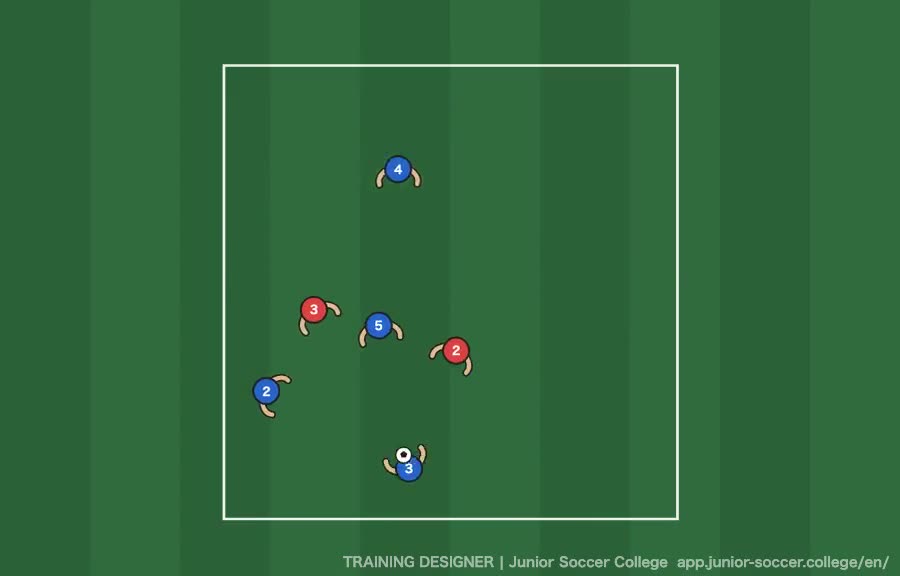
4v2 Rondo (3 outside, 1 inside) — Attack4+2 players · U-10 and up · Keeping the ball, progressing
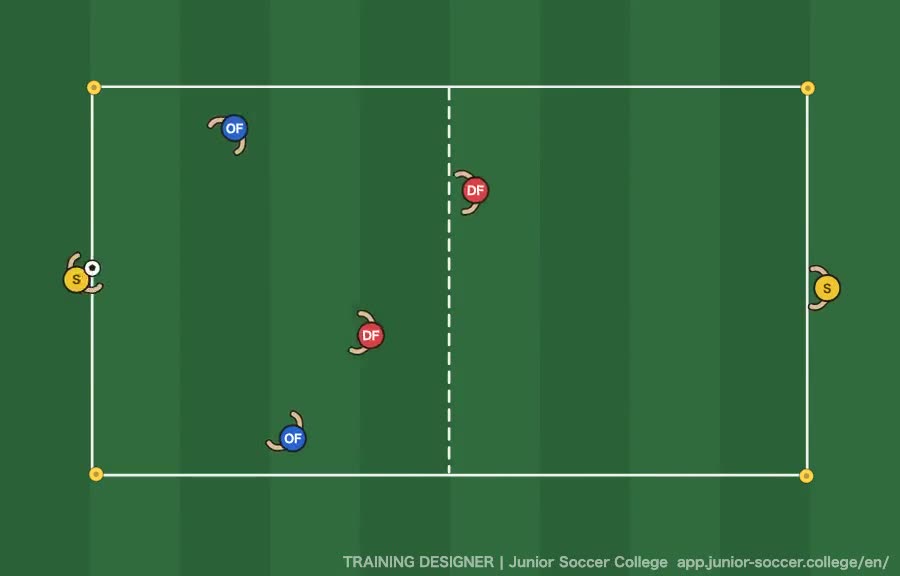
2v2 + 2 Servers Rondo — Losing Your Marker and the Third Player6 (2 + 2 servers + 2) players · U-11 and up · Keeping the ball, progressing
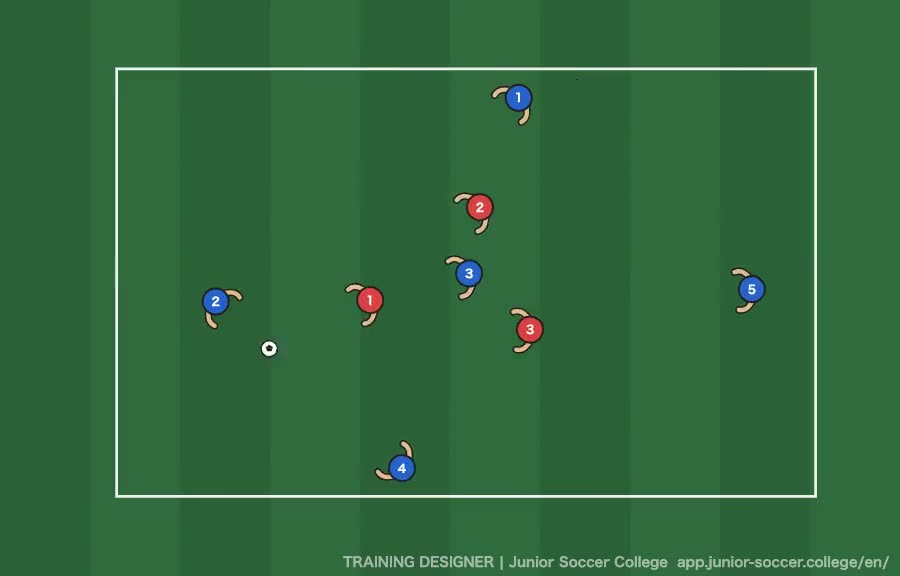
5v3 Rondo — Creating Local Overloads and Fluidity5+3 players · U-11 · Keeping the ball, progressing
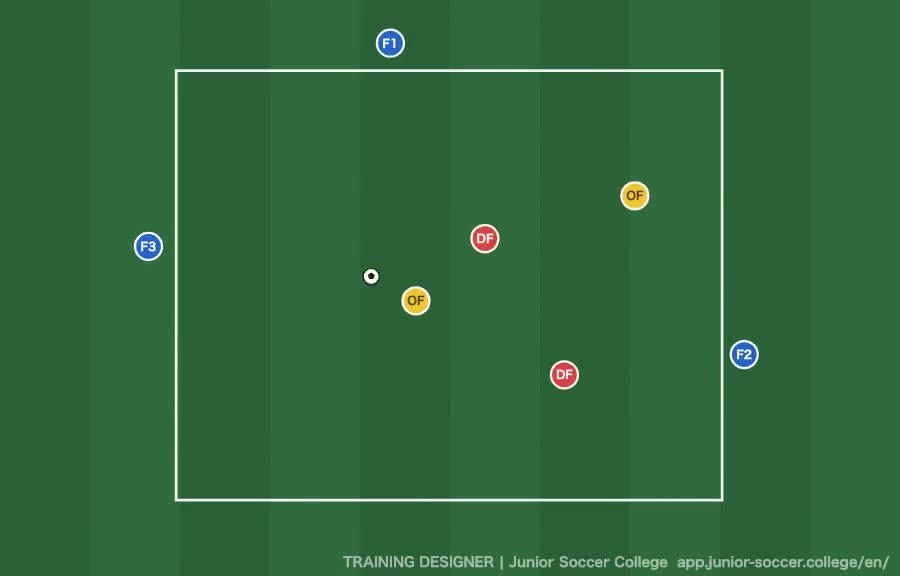
2v2+3 Rondo — Width and Depth with Your Teammates2+2+3 players · U-11 · Keeping the ball, progressing
I'm Kazu — a youth football coach in Japan since 1995. These are sessions I actually use, shared from the Japanese coaching site I have run for years (Junior Soccer College). I also write a free weekly newsletter on how children learn the game.