Training Library › Attack
2v1 Progression — Learning the Height of Support (Works for U-9)
The width and height of support for progressing
Players: 2+1Area: about 15×25 mAge: U-9 and upTime: 15 minPhase: Attack
Setup & rules
- In a 2v1 situation as in the diagram, the two attackers get past the one defender and pass to one of the players waiting ahead.
- The player who made the pass becomes the defender, and 2v1 starts again; repeat.
- The player who didn't make the pass doesn't play on and goes to the back of the line.
- If the defender wins the ball, they pass to the group behind.
- Until the pass is played, the attackers may win the ball back.
RULES: none in particular
Key factors
- When the ball carrier is not under pressure, the supporting player takes a position beyond the opponent's line.
- When the ball carrier is under pressure, the supporting player drops to secure a passing lane, then gets past the defender with an oriented control.
- If the defender cuts the dribbling lane, the ball carrier prioritizes the pass.
- If the defender cuts the passing lane, get past with a carrying dribble (conducción) — so it doesn't become a duel of dribbling to beat the defender (regate).
- When passing, the ball carrier draws the defender in.
- The ball carrier feints: pretend to pass and dribble, or pretend to dribble and pass.
(* Depending on age and level, there are many other key factors besides these. Think about them yourselves.)
Progressions
- Even with older players (upper primary), it can be an effective practice if you adapt it, e.g. by narrowing the space or setting an offside line
- If the defender presses quickly once they pass to a waiting player, intensity goes up and you can also train quick decisions under a high press
- Unless you develop this into 3v2 and similar, players won't acquire tactics and technique they can actually use in matches
Kazu's notes FROM THE COACH
- In my experience, even U-9 players (around 8–9 years old, Japanese grade 3) could do it without any trouble. It works well as an "introduction" to purposeful support — being aware of the height of your position, or improving support that is just done vaguely
PROBLEMS WITH THIS PRACTICE
- It is good as an "introduction to purposeful support", but it feels like it cuts the situation down too much (it leaves out complex phenomena such as other defenders pressing after the supporting player receives, or the shot or the next defender coming after getting past with a dribble)
- The technical actions tend to become stronger than the tactics
- Because the movement is simple, some players learn it fairly quickly, and if the level at which they find it difficult differs from other players, it becomes boring
- It is positioned as an "introduction to awareness" rather than something "match-realistic". If players forget to adjust the height of their support when numbers increase, it's good to go back to a simple practice once
* Grid size is an estimate from the diagram and numbers
Use this drill in your own session
Download it and open it in TRAINING DESIGNER — a free drill designer and session planner in your browser. Edit the diagram, change the numbers, add it to a session, and export as PDF, GIF or video.
In the app: menu → “Import external data” → choose the downloaded file. No sign-up needed. The original Japanese article: junior-soccer.college.One idea a week from Japanese youth football
A free weekly essay on how kids actually learn the game — complexity, the ecological approach, and what 30 years on Japanese grassroots pitches taught me.
Related drills
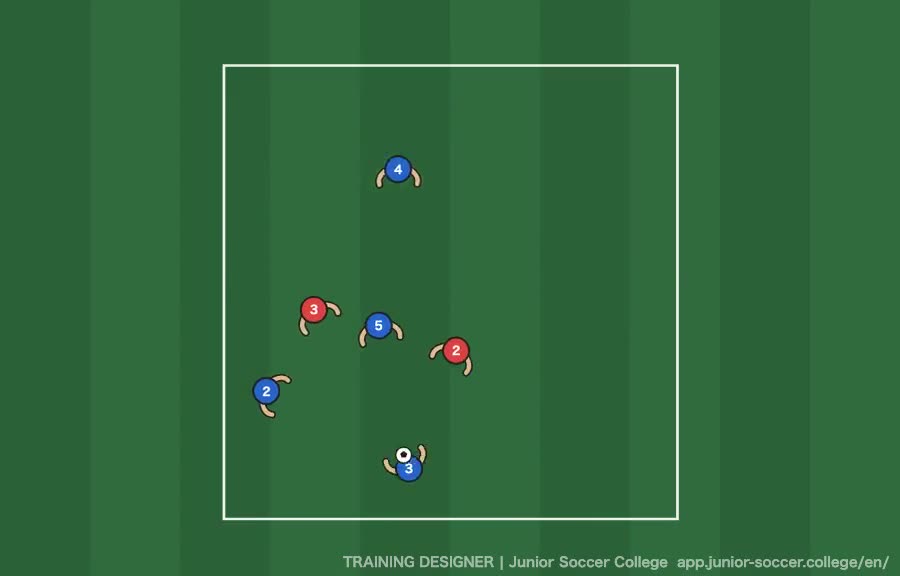
4v2 Rondo (3 outside, 1 inside) — Attack4+2 players · U-10 and up · Keeping the ball, progressing
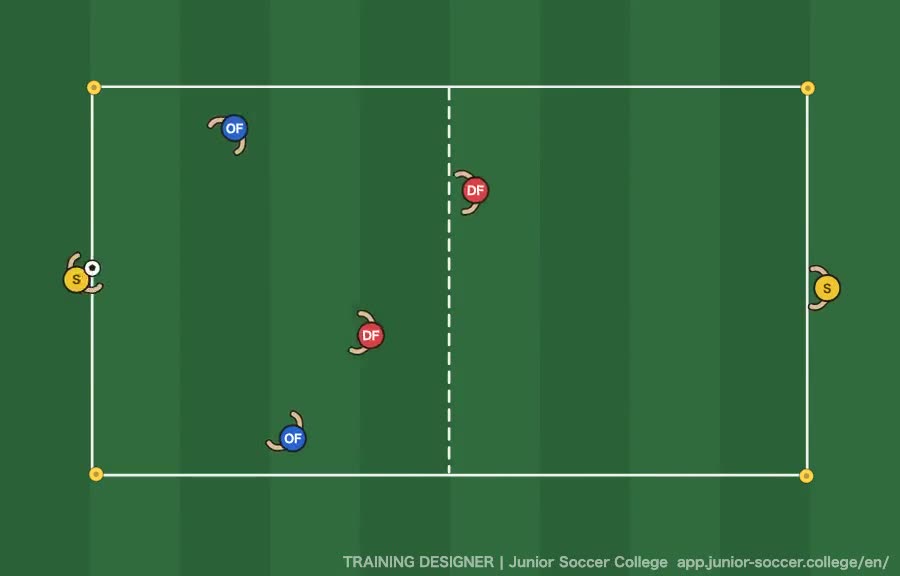
2v2 + 2 Servers Rondo — Losing Your Marker and the Third Player6 (2 + 2 servers + 2) players · U-11 and up · Keeping the ball, progressing
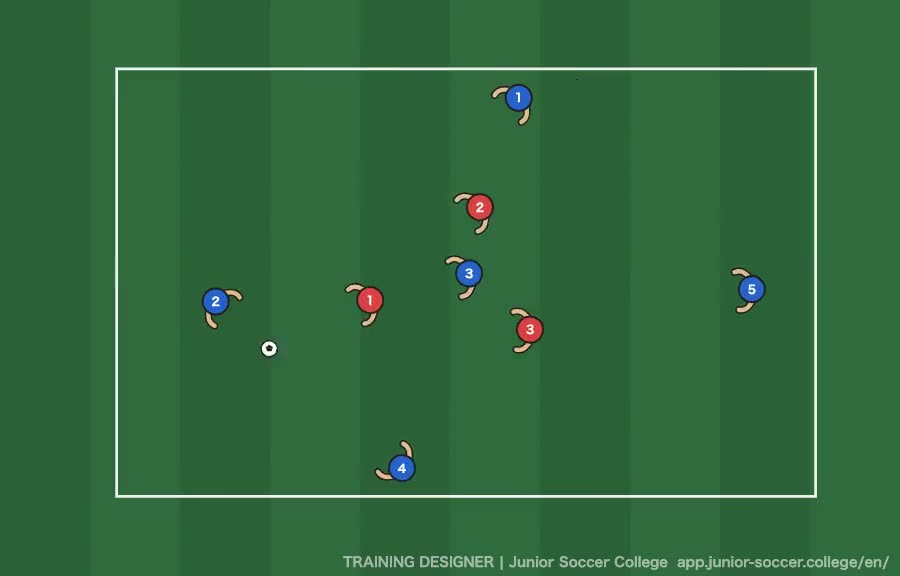
5v3 Rondo — Creating Local Overloads and Fluidity5+3 players · U-11 · Keeping the ball, progressing
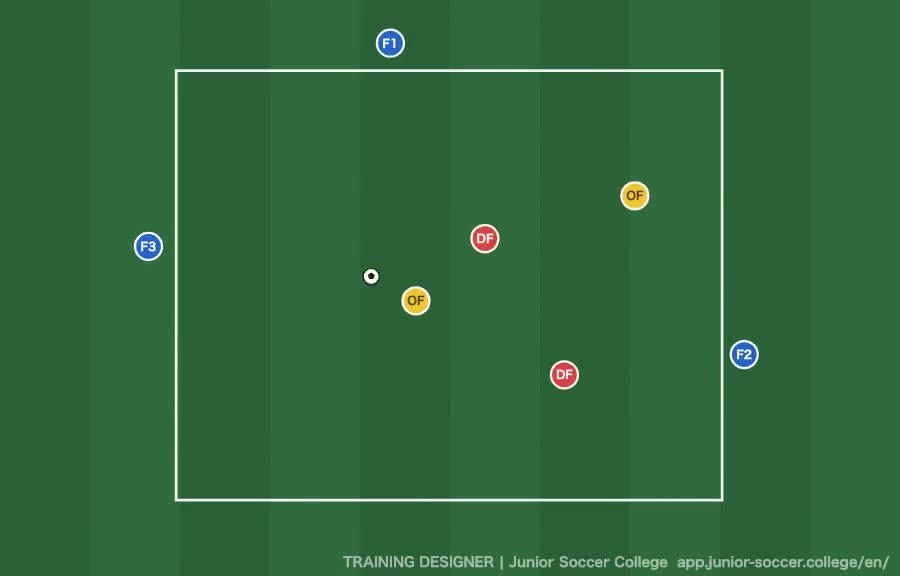
2v2+3 Rondo — Width and Depth with Your Teammates2+2+3 players · U-11 · Keeping the ball, progressing
I'm Kazu — a youth football coach in Japan since 1995. These are sessions I actually use, shared from the Japanese coaching site I have run for years (Junior Soccer College). I also write a free weekly newsletter on how children learn the game.