Training Library › Keeping the ball
Multi-Ball Rondo with Irregular Grids
Emergence of technique and tactics from an ecological perspective
Players: 4–6Area: Set freelyAge: U-11 and upTime: 3 minPhase: Keeping the ball
Setup & rules
- Prepare different grids and play small-sided rondos inside them
- Also, depending on the court, use different balls — smaller or bigger than usual, a rugby ball, and so on
- Rotate on time
Key factors
* The key factors of a normal rondo
However, in this practice, what solutions the players find — or leading to play the coach doesn't expect — is more important
Progressions
It's fine to change the number of players in each group as you go.
(Don't repeat the same environment)
Kazu's notes FROM THE COACH
AN ECOLOGICAL PERSPECTIVE
- A rondo reduces the complexity of the match (task simplification) while involving the same kind of perception and decision-making as a real match, so it is a highly representative learning environment
- The emergence of "functional variability" through multiple balls
- Promoting "co-adaptation" through irregular grids (trapezoid, triangle, etc.)
- "Repetition without repetition" through rotation
Use this drill in your own session
Download it and open it in TRAINING DESIGNER — a free drill designer and session planner in your browser. Edit the diagram, change the numbers, add it to a session, and export as PDF, GIF or video.
In the app: menu → “Import external data” → choose the downloaded file. No sign-up needed.One idea a week from Japanese youth football
A free weekly essay on how kids actually learn the game — complexity, the ecological approach, and what 30 years on Japanese grassroots pitches taught me.
Related drills
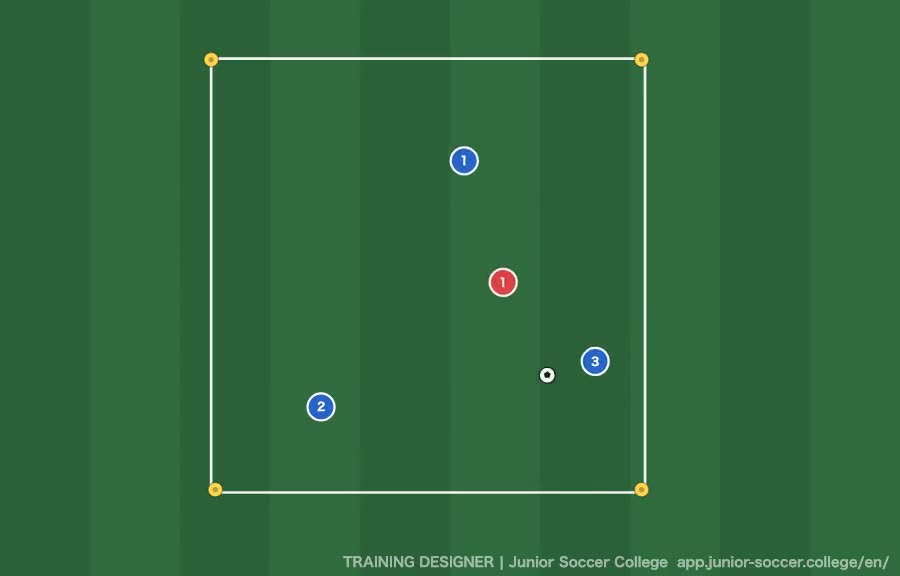
3v1 Rondo (Attack)4 players · U-7 · Keeping the ball
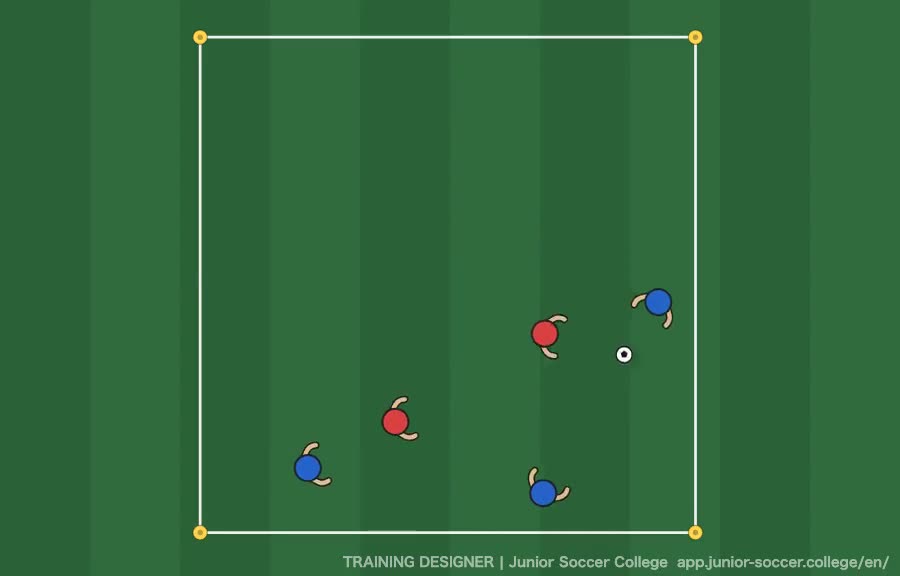
3v2 Rondo — Choosing Outside or Inside Support3+2 players · U-8 and up · Keeping the ball
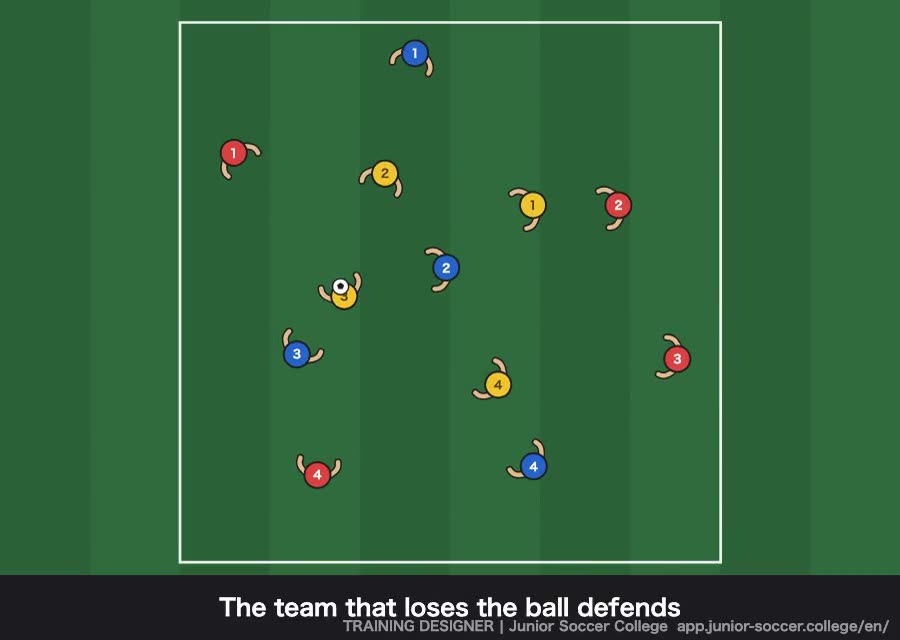
4v4+4 Possession (No Passes to Your Own Colour)12 players · U-12 · Keeping the ball
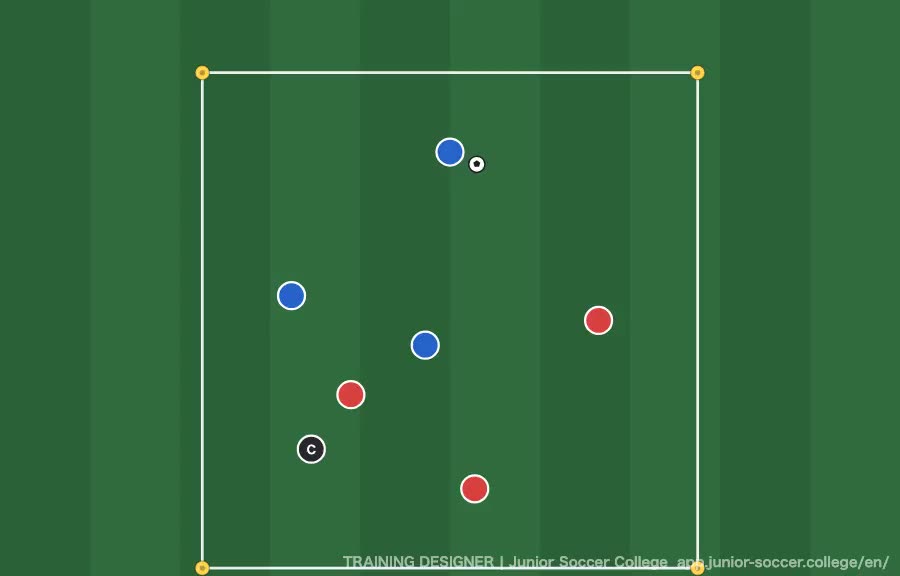
3v3 + 1 Floater Possession — Escaping the Press with Fluid Movement3+3+1 floater players · Any age · Keeping the ball
I'm Kazu — a youth football coach in Japan since 1995. These are sessions I actually use, shared from the Japanese coaching site I have run for years (Junior Soccer College). I also write a free weekly newsletter on how children learn the game.