3v1 Rondo (Attack)
An introduction to rondos
Use this when…
Players get pressed the moment they receive, panic, kick it away and lose it. You want them to learn to judge when there is a passing lane and when there isn't.
Setup & rules
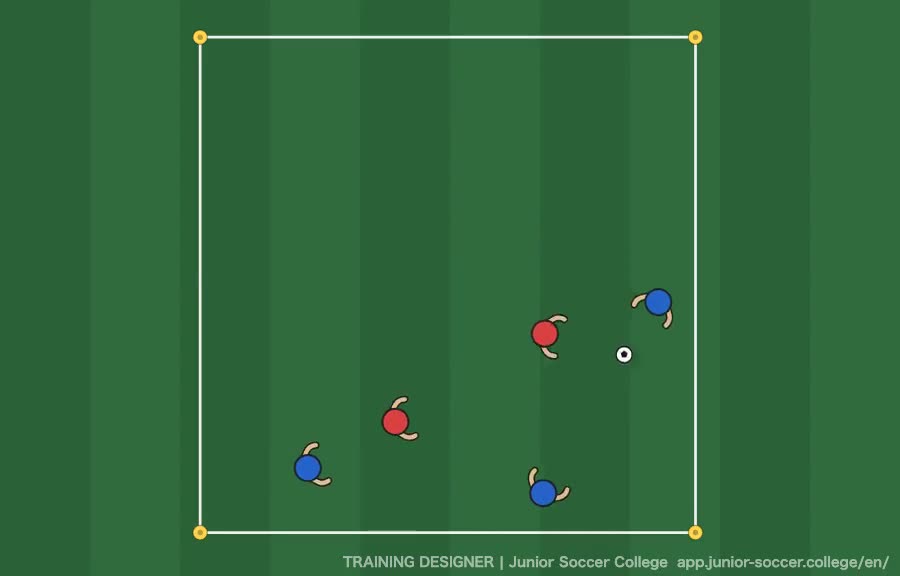
- The three attackers position themselves to form a triangle.
- They exchange passes and keep the ball so the defender cannot win it.
- When the defender wins the ball, roles switch (the player who won it joins the attackers; the attacker who touched the ball last becomes the defender).
Key factors
- Create a passing line (don't stand behind the defender)
- When there is no passing lane, dribble
Questions to ask your players
- How many passing lanes do you have right now?
- If there's no passing lane, what do you do? (→ dribble to buy time)
- Before you received, where did you look?
What success looks like
When there is no passing lane, players don't kick it away — they settle the ball and keep it.
Kazu's notes FROM THE COACH
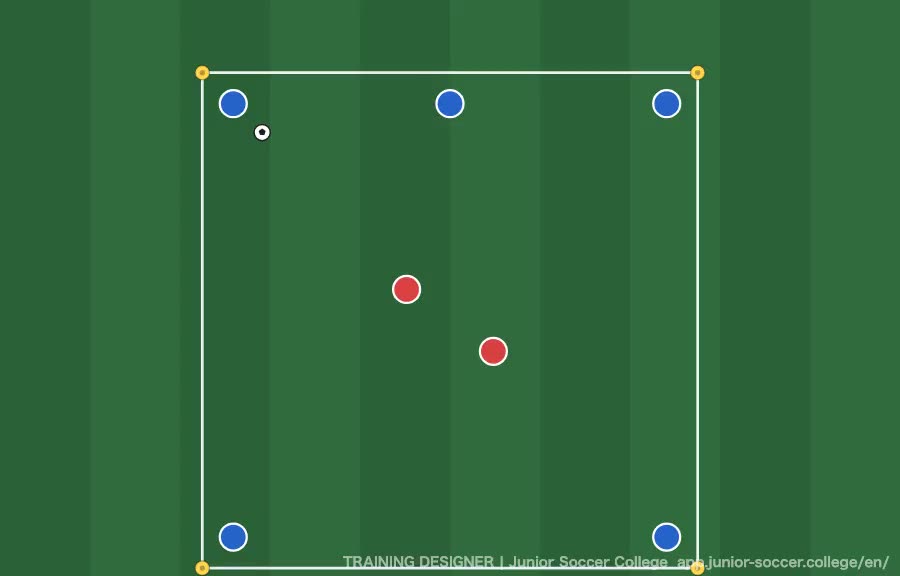
With younger players, if you set no conditions at all, supporting movement will probably disappear (players just stand still).
So if the attackers are asked to receive the ball with the corners of the grid in mind, a good distance and angle appear naturally, and supporting movement is much more likely to emerge.
If the idea of a "corner" is hard for young players, it may help to mark the points with markers.
Use this drill in your own session
Download it and open it in TRAINING DESIGNER — a free drill designer and session planner in your browser. Edit the diagram, change the numbers, add it to a session, and export as PDF, GIF or video.
In the app: menu → “Import external data” → choose the downloaded file. No sign-up needed.One idea a week from Japanese youth football
A free weekly essay on how kids actually learn the game — complexity, the ecological approach, and what 30 years on Japanese grassroots pitches taught me.
Related drills