Training Library › Keeping the ball
6v6 Possession — Keeping the Ball Moving with Equal Numbers
Keeping the ball with mobility in equal numbers
Players: 6+6Area: about 30×30 mAge: U-11 and up (from around 10–11 years old, Japanese grade 5)Time: 20 minPhase: Keeping the ball
Setup & rules
- The attacking team keeps the ball without losing it
- When the defending team wins the ball, attack and defence swap
- If the ball goes out, the coach plays a new ball in to restart
- Condition: none in particular
- Time: about 15–25 minutes
- Adjust the pitch size according to how often the situation you want actually happens
Key factors
- When you switch to attack, always take up starting positions (encourage players to position themselves on both sides of the ball carrier, in the centre, and far away. This gives a balanced shape. Depending on the flow of play, one player in the centre is fine)
- If you're free, you don't need to move (if the attackers are always free and the ball keeps moving, there's no particular need to move)
- What triggers mobility: when the player close to the ball (ideally the central player) has their passing lane cut or is marked, they move first, and the surrounding players adjust their positions in connection with it (rather than prescriptive coaching, encourage them: "If you're marked, move anywhere else and get the ball there." If players' positions overlap, encourage one to move somewhere else)
- Moving inside from the side: if the passing lane to the side is cut, move into the centre and receive there if you're free (if the marker follows, another player creates a passing lane on the side. When the wide player comes into the centre, the player who was originally in the centre moves and prepares by predicting the next action)
- IMPORTANT: can individuals create time? Because players have the advantage of creating time with techniques that beat the press — a carrying dribble or a good first touch — the players around them have time to redo their support and swap positions (without the technique and decision-making to create that moment of time, the ball won't circulate)
Progressions
- Depending on numbers, 5v5 to 8v8 is also fine (you can train it with anything from 4v4 to 8v8 as long as the numbers are equal. More players means more complexity)
Kazu's notes FROM THE COACH
What it can improve: how the whole team keeps its balance / keeping the ball with mobility / technical skills when there is no passing lane (difficulty: high).
Coaching points:
- Observe whether the ball carrier can judge whether a passing lane is there or not (are they passing from an image alone, without lifting their head?)
- Focus on off-the-ball movement (can the player close to the ball move into an effective position? Can the player far from the ball predict and prepare?)
- Don't worry about small mistakes (look at the whole picture, prioritise what to improve and help players understand one thing at a time; then the ball will start circulating as a team)
Even if you feel like changing it into an overload practice, you need to be patient (the problems that come up with equal numbers also happen in matches).
Use this drill in your own session
Download it and open it in TRAINING DESIGNER — a free drill designer and session planner in your browser. Edit the diagram, change the numbers, add it to a session, and export as PDF, GIF or video.
In the app: menu → “Import external data” → choose the downloaded file. No sign-up needed. The original Japanese article: junior-soccer.college.One idea a week from Japanese youth football
A free weekly essay on how kids actually learn the game — complexity, the ecological approach, and what 30 years on Japanese grassroots pitches taught me.
Related drills
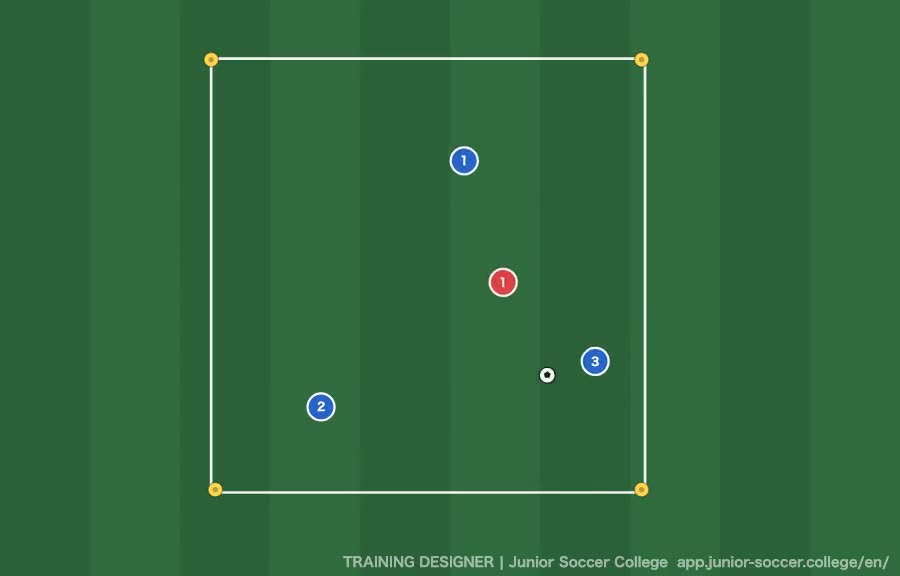
3v1 Rondo (Attack)4 players · U-7 · Keeping the ball
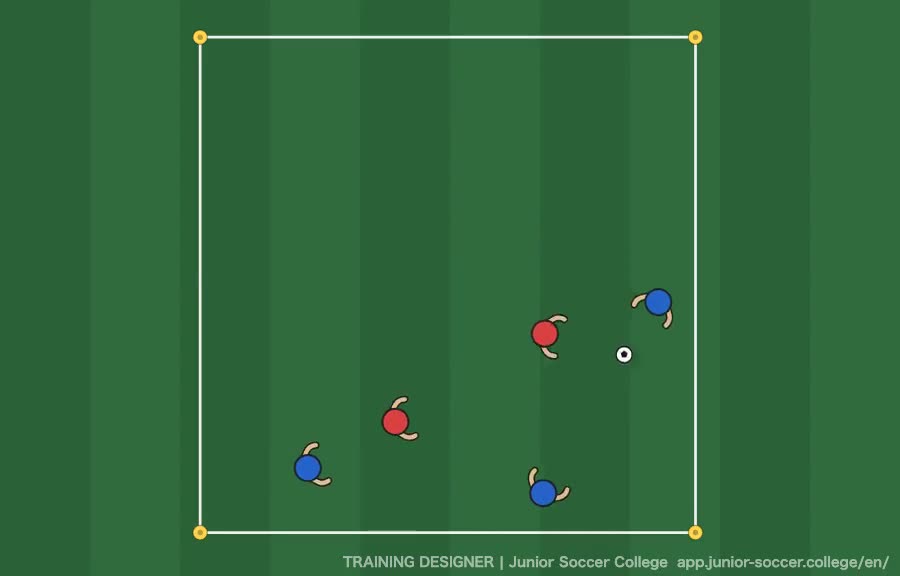
3v2 Rondo — Choosing Outside or Inside Support3+2 players · U-8 and up · Keeping the ball
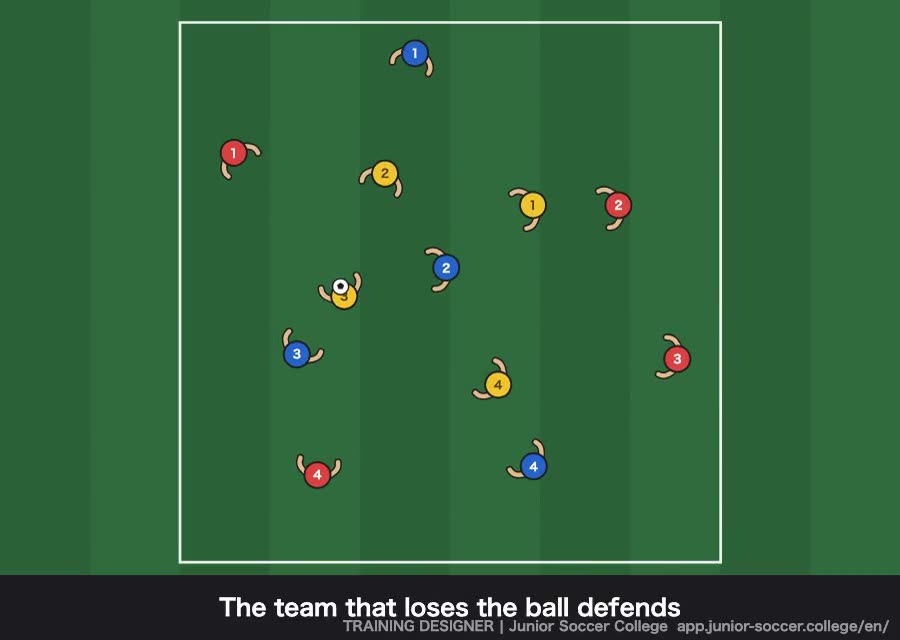
4v4+4 Possession (No Passes to Your Own Colour)12 players · U-12 · Keeping the ball
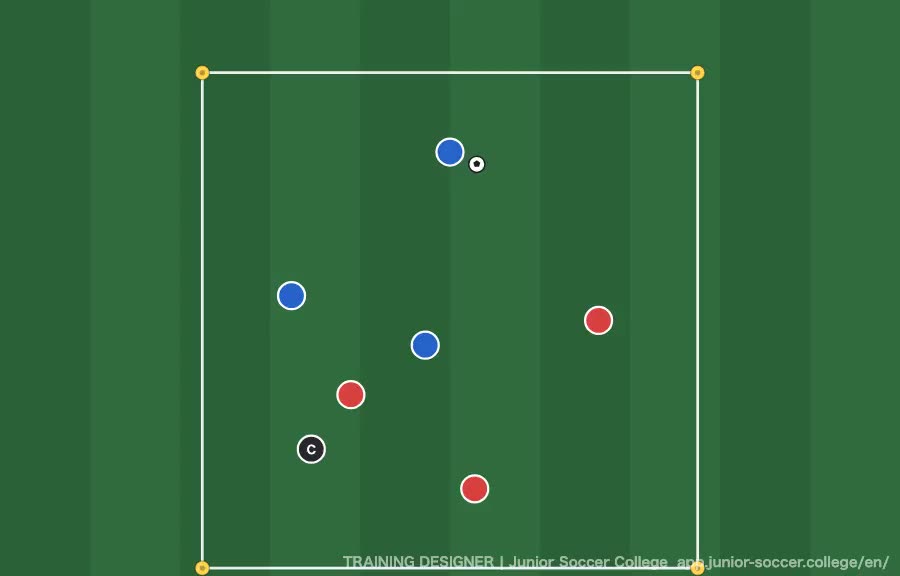
3v3 + 1 Floater Possession — Escaping the Press with Fluid Movement3+3+1 floater players · Any age · Keeping the ball
I'm Kazu — a youth football coach in Japan since 1995. These are sessions I actually use, shared from the Japanese coaching site I have run for years (Junior Soccer College). I also write a free weekly newsletter on how children learn the game.